

 English
 中文简体
 عربى
 Español



U-Joint Size Chart: How to Measure, Match, and Install the Right Universal Joint
Posted by Admin | 18 Sep
Content
A delivery van rolls into the workshop with a rhythmic clunk that grows louder under load. The technician finds play in the driveshaft and orders a universal joint by memory. The replacement part arrives, and it will not enter the yoke: the new bearing caps measure 1.062 inches across, but the yoke bore was machined for 1.188-inch caps. That single mismatch stops the whole repair job. A universal joint is not selected by vehicle name alone; it is selected by three dimensions: bearing cap diameter, width cap to cap, and retaining lock type. A u joint size chart turns those three values into a recognized series, so the next part slides in and lasts.
Why a U-Joint Size Chart Should Be Your First Step
Universal joints are built to tight tolerances, and their fit in the yoke is not forgiving. Bearing cap diameters are typically held within ±0.002 inch (0.05 mm). A cap that is 0.02 inch (0.5 mm) larger than the bore simply will not enter. A cap that is smaller by the same amount rocks under load, brinells the cap, and wears the yoke bore oval. Either result is a comeback within a few hundred miles.
Width errors are just as damaging. A joint that is too wide will not allow the snap rings to seat, leaving axial play of less than 0.01 inch (0.25 mm) that hammers the yoke at every torque reversal. A joint that is too narrow lets the caps move in and out of the bore until the bearing outer races are destroyed. As a driveline component manufacturer serving OEM and aftermarket customers, we see mis-sized returns every month, and nearly every one traces back to someone skipping the chart.
How to Measure a Universal Joint
Remove the joint from the driveshaft, clean the caps, and use a caliper with 0.001-inch resolution. Do not measure a greased joint; lubricant and dirt hide the true contact faces. Follow these four steps:
- Identify the lock style. Look into the yoke window. If the snap ring grooves are cut into the inner faces of the ears, the joint is an inside-lock design. If the bearing caps carry a groove near their outer ends and the rings seat on the outside of the yoke, it is an outside-lock design.
- Measure the bearing cap diameter. Hold the caliper across the widest point of one cap, then measure again 90 degrees away to catch taper or wear. Use the larger of the two readings.
- Measure the cap-to-cap width. Center the cross and measure from the outside face of one cap to the outside face of the opposite cap. A worn joint may show a smaller width if the trunnions are stretched.
- Record the cross body dimensions. On some series, the length of the cross body and the distance between seal grooves separate visually identical sizes, and they matter for two-piece driveshafts with a carrier bearing.
| Measurement | What It Controls | Example Reading |
|---|---|---|
| Bearing cap diameter | Yoke bore fit | 1.062 in. / 26.97 mm |
| Width, cap to cap | Snap ring engagement | 3.219 in. / 81.76 mm |
| Lock type | Retaining method | Inside or outside |
Common U-Joint Size Chart by Series
The table below lists the inch-series u-joints most common on light trucks, vans, and SUVs. The numbers are standard catalog dimensions; some OEM versions vary by a few thousandths of an inch, so always verify a used joint before ordering.
| Series | Cap Diameter | Width, Cap to Cap | Typical Application |
|---|---|---|---|
| 1210 | 1.062 in. / 27.0 mm | 2.438 in. / 61.9 mm | Compact pickups, small SUVs |
| 1310 | 1.062 in. / 27.0 mm | 3.219 in. / 81.8 mm | Light trucks, classic 4x4s |
| 1330 | 1.062 in. / 27.0 mm | 3.625 in. / 92.1 mm | Full-size pickups, vans |
| 1350 | 1.188 in. / 30.2 mm | 3.625 in. / 92.1 mm | Heavy-duty trucks, one-ton pickups |
| 1410 | 1.188 in. / 30.2 mm | 4.188 in. / 106.4 mm | Commercial trucks, high-torque 4x4s |
Notice how the 1330 and 1350 series share the same overall width but use different cap diameters. If you check only one dimension, you can easily order the wrong part. Cross-check at least two measurements against the chart.
Inside Lock vs. Outside Lock: The Detail Most Charts Miss
Two u-joints can have the same bearing cap diameter and the same width, yet only one will fit a given shaft. The difference is where the retaining rings are designed to sit, and it is the detail most size charts tuck into the fine print.
| Feature | Inside Lock | Outside Lock |
|---|---|---|
| Retaining ring position | Inside the yoke window | Against the outer face of the yoke ears |
| Ring groove location | Machined in the yoke ear | Machined around the bearing cap |
| Visual check | Flat cap face flush with the ear | Groove visible near the cap outer end |
When you consult a u joint size chart, confirm which lock style the chart references. Some catalogs list inside-lock and outside-lock versions of the same series, and mixing them is one of the most common reasons a correctly sized joint still fails to assemble.
When the U-Joint Size Chart Doesn't Apply: CV Joints
U-joints remain the standard connection for propeller shafts, where operating angles are modest and a small speed fluctuation is acceptable. CV joints, on the other hand, maintain constant velocity through much higher steering and suspension angles, which is why they are used on the driven axles of front-wheel-drive cars, independent-suspension SUVs, and modern EV drive units.
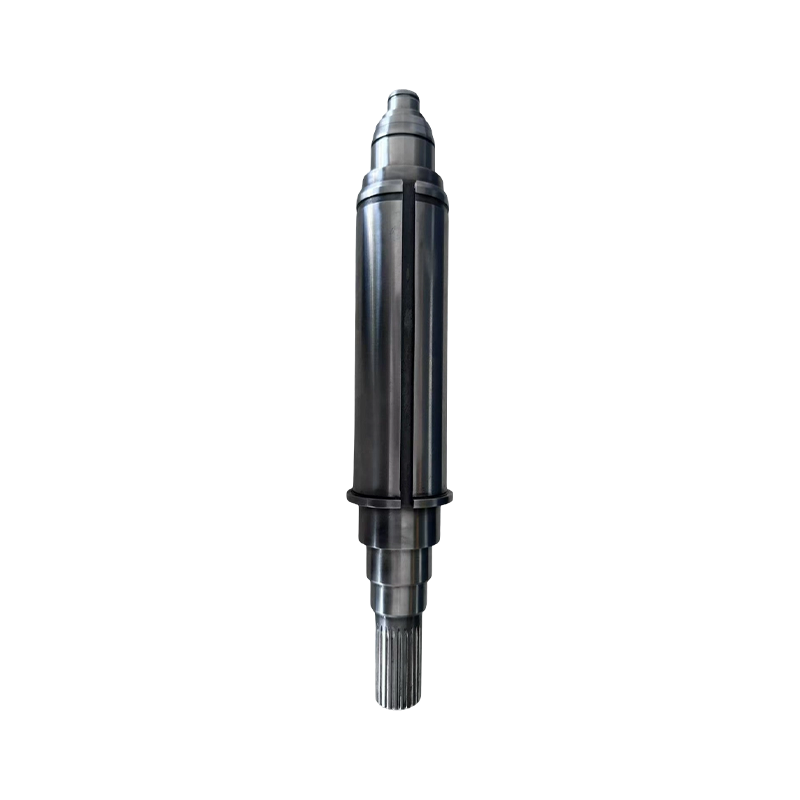
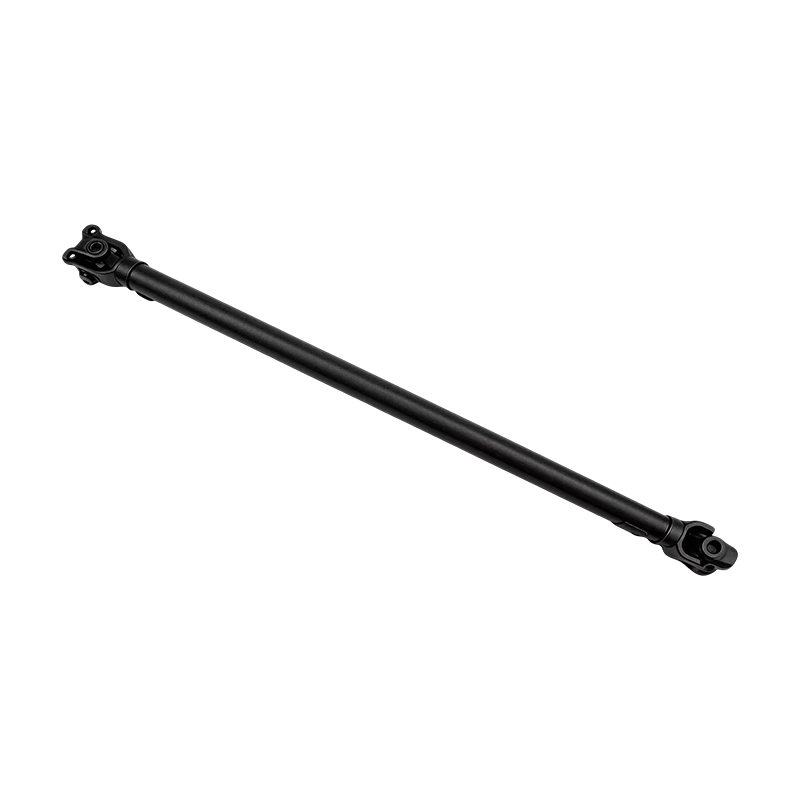 High-Rigidity Prop Shaft Assembly for Modern DrivetrainsThis intermediate shaft assembly connects the transmission to the differential, reducing torque steer and NVH. Its precision bearings and dynamic balancing make it a key replacement when yoke ears wear beyond tolerance.View Product →
If the failing component sits inside a rubber boot at the wheel end of an axle, it is a CV joint, and a u joint size chart will not help you order it. CV joints are identified by the assembly that contains them: wheel-end spline count, outer bearing diameter, and axle shaft diameter. If you are working on a two-piece driveshaft with a center carrier bearing, the prop shaft itself is replaced as an assembly when the yoke ears are worn beyond the bore tolerance.
Understanding where each joint type belongs in the powertrain prevents ordering errors before they cost a customer a day of downtime. Our overview of what makes up a driveline explains the layout of shafts, joints, carriers, and boots, and why each component is measured differently.
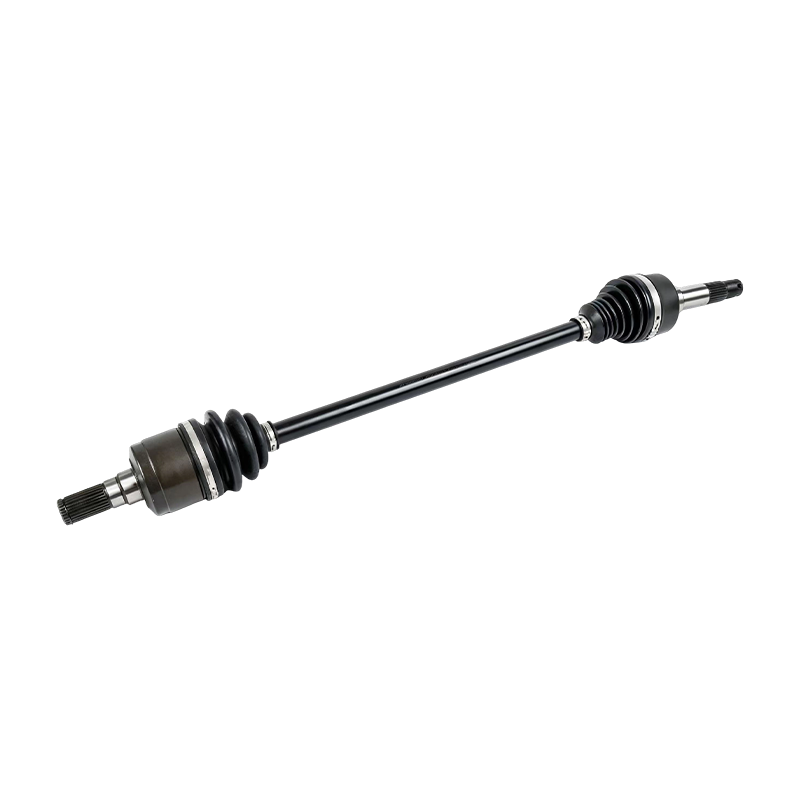
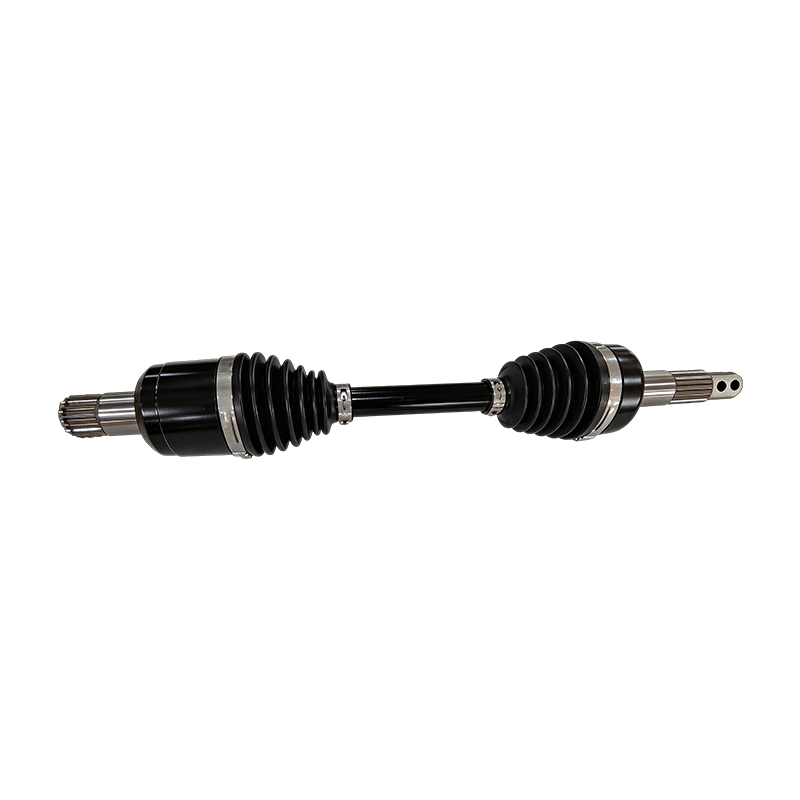 OE-Standard CV Axle Assembly for Mainstream VehiclesDesigned to original equipment specifications, this drive shaft uses high-strength alloy steel and precision CNC machining for reliable torque transfer. Consider it when replacing a complete axle with worn wheel-end joints.View Product →
For axle shafts that use constant-velocity joints at the wheel end, the outer joint takes the highest combination of steering angle and drive torque. Replacement axle assemblies are engineered around that outer joint position, and the complete shaft is typically balanced as a unit.
A Replacement Checklist That Keeps the Joint in the Yoke
Even with the correct size chart, installation can fail if the surrounding components are worn. Work through this checklist whenever a u-joint or a CV axle is on the bench:
- Inspect the yoke ears for ovality. A bore that is no longer round will not hold a new bearing cap correctly. Replace the yoke or the complete shaft before fitting the joint.
- Clean the snap ring grooves. Hardened grease and rust scale in the yoke grooves leave no room for the new rings and lift the caps out of alignment.
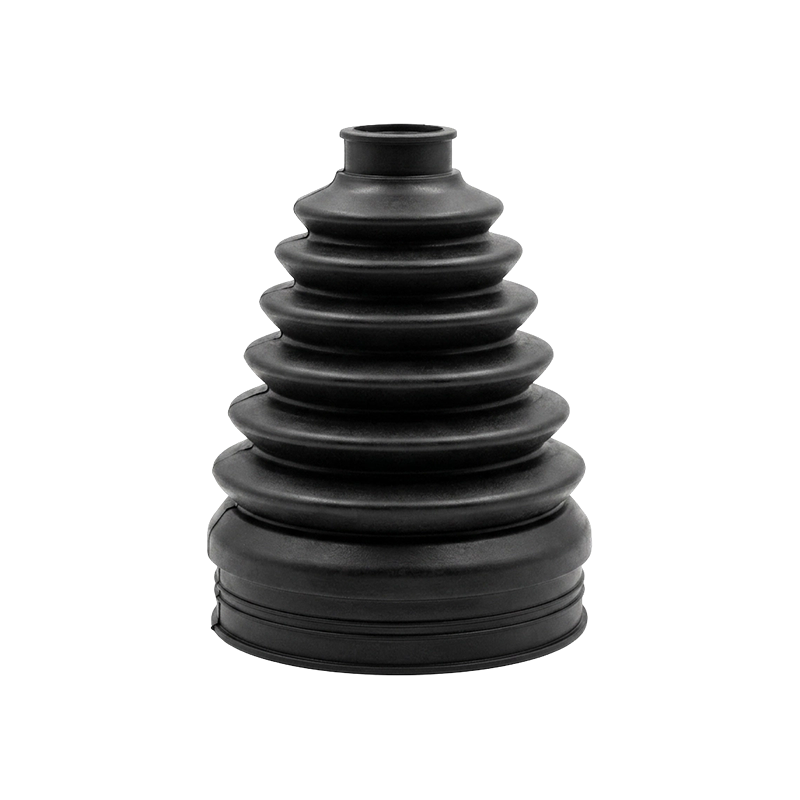
- Replace the boot with the joint. A torn boot is what killed the original joint on many CV axles. Installing a new joint under a damaged boot repeats the failure in one season of driving.
- Center the joint during installation. Drive the caps in with a soft-faced tool or an arbor press, alternating sides. Striking the cap edge is the leading cause of premature bearing damage on new joints.
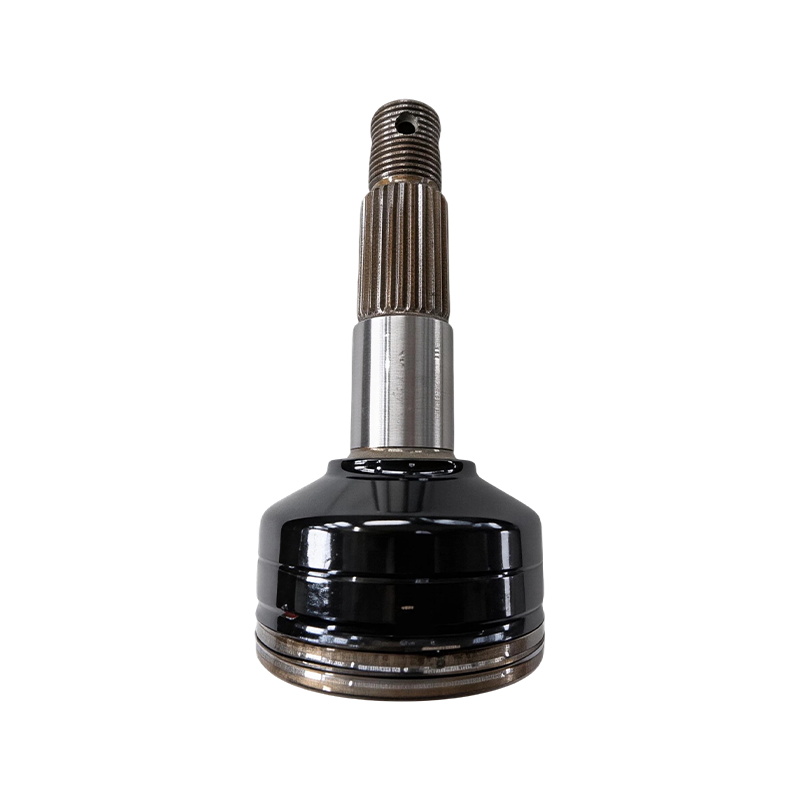 Durable Outer CV Joint with Pre-Greased BootThis outer joint handles high steering angles and drive torque, featuring induction-hardened alloy steel and a neoprene boot with MoS2 grease. It restores factory geometry when the wheel-end joint is worn.View Product →
On CV-equipped vehicles, the outer joint is the high-wear component because it carries both drive torque and steering angle. Replacing it with a correctly matched outer CV joint restores the axle to factory geometry. The same discipline that makes a u joint size chart useful - measure first, compare second, install third - applies to every rotating joint on the vehicle.

MAIL US
CONTACT US
+86 133 0665 0391
MAIL US
No. 169 Songpu Road, Cidong Industrial Zone, Cixi City, Ningbo City, Zhejiang Province, China
 OEM/ODM Automotive Chassis Sealing Components Manufacturer
EV Drivetrain Components Supplier