

 English
 中文简体
 عربى
 Español



Driveshaft Out of Balance: How to Tell, Diagnose, and Fix the Vibration
Posted by Admin | 25 Sep
Content
You are cruising at 70 mph on the interstate when a faint buzzing creeps up through the floor pan. It grows stronger as the needle climbs to 75, softens when you ease off the throttle, and nearly disappears when you coast in neutral. If that sequence sounds familiar, the driveshaft is the first place to look.
An unbalanced driveshaft produces a vibration that is speed-dependent, load-sensitive, and unrelated to steering input. That combination is the quickest way to tell it apart from wheel, tyre, and suspension issues. When the symptom follows vehicle speed rather than engine speed, the balance of the rotating shaft deserves scrutiny before you spend money on tyres or alignment.
The Signature Signs of Driveline Imbalance
Driveline imbalance does not always announce itself with the same vibration pattern, but a few characteristics are consistent across vehicles. The clearest indicator is a vibration that peaks inside a narrow speed window — often between 55 and 75 mph — and grows more intense as you accelerate through that range.
Vibration that changes with road speed
Because the driveshaft rotates several times for each wheel revolution, its vibration frequency rises with road speed. An unbalanced shaft typically produces a low-frequency oscillation you feel through the seat and floor, rather than through the steering wheel. If the shaking appears only at a specific speed and then fades above it, the resonance point tells you the shaft is rotating out of true.
Load-sensitive shudder during acceleration
Torque applied through the driveline increases deflection of the shaft and amplifies any imbalance. Many drivers report the vibration is strongest when accelerating uphill and barely noticeable at a steady cruise. If you feel a shudder that comes and goes with throttle position, the diagnosis is well on its way.
Less common but equally useful clues include:
- A rhythmic knocking or clunk that gets faster as the vehicle accelerates
- A metallic chirp from the centre bearing area, especially in trucks with two-piece shafts
- Uneven or polished wear marks on the driveshaft tube
| Observed symptom | Typical behaviour | Diagnostic value |
|---|---|---|
| Buzzing vibration, 55–75 mph | Peaks in one speed band, fades at higher speed | Strong indicator of imbalance |
| Shudder on acceleration | Worse under load, better when coasting | Points to shaft or U-joint angle |
| Clunking at launch | Single or repeated knock when taking off | Often worn U-joints, imbalance secondary |
| Vibration in seat, not steering wheel | Floor-pan buzz independent of steering position | Separates shaft from wheel issues |
Verify the Driveshaft Before You Blame the Tyres
Wheel balance problems are the most common false positive in this diagnosis. If the vibration does not move when you swap front and rear wheels, or if it remains after the tyres have been balanced twice, the imbalance is almost certainly in the driveshaft. If you want a refresher on where each component sits before running the checks, read this overview of the components of a driveline first.
- Check tyre pressure, wheel runout, and balance on the affected axle; rule out damaged tyres before touching the driveline.
- Raise the vehicle, shift into neutral, and rotate the driveshaft by hand; feel and listen for roughness in the U-joints.
- Wipe the tube clean and look for missing balance weights, weld splatter, dents, or rust scale; any of these changes the shaft's mass distribution.
- Grip the shaft near each yoke and push hard in both directions; more than a few millimetres of play means the U-joint or slip yoke is worn.
- Mark the position of the balance weights, rotate the shaft 180 degrees relative to the flange, and road-test; a shift in the vibration confirms a balance problem.
A point that is easy to miss: mud, heavy undercoating, or corrosion on the tube can add mass unevenly and create imbalance on a shaft that was originally balanced. Cleaning the tube and checking for retained debris is part of a proper diagnosis, not an afterthought.
Why Imbalance Develops and How It Worsens
Imbalance rarely appears without a reason. Impact damage from a stone or curb strike can dent a tube that is less than two millimetres thick, and a dent is enough to shift the shaft's centre of mass. Missing balance weights are another common cause, often the result of a careless repair where the technician removes the weights and never refits them.
Once imbalance exists, it feeds back into the driveline. A shaft spinning at 3,000 rpm with a small mass offset generates a centrifugal force that rises with the square of rotational speed — which is why the vibration becomes violent at highway speed and nearly vanishes in town. That force accelerates wear on the output-shaft bearing, the transmission seal, the pinion bearing, and the U-joints themselves.
Shop insight: a shaft "rebalanced" with a hose clamp or added washers is a temporary fix at best. Every rebalance must start from a clean, undamaged tube; otherwise you are chasing a vibration that will return.
The cost of ignoring the problem is measurable. In fleet service, an unbalanced driveshaft left in place typically produces premature differential seal failure and early U-joint replacement. In a passenger car, the consequences show up first as cabin vibration and increased component wear, but the risk of a seized U-joint is real and can disable the vehicle in an instant.
Rebalance, Repair, or Replace: The Practical Decision
The decision depends on the physical condition of the shaft, not on the strength of the vibration. A shaft with an intact tube, good yokes, and healthy U-joints can go to a driveline shop and be rebalanced at modest cost. A shaft with a dented tube, a cracked weld at the yoke, or heavy corrosion needs replacement, because straightening a dented tube compromises its fatigue life and the balance repair will not hold.
When replacement is the better call
Structural damage is the main trigger. An impact dent deeper than about one millimetre, any surface crack, or visible runout of more than 1.5 mm at the centre of the tube means the shaft has lost its factory geometry. Trying to balance a damaged shaft wastes money and downtime. The same applies when a two-piece shaft has a worn centre bearing: repair the bearing and inspect the shaft, because a failing bearing can imitate imbalance perfectly.
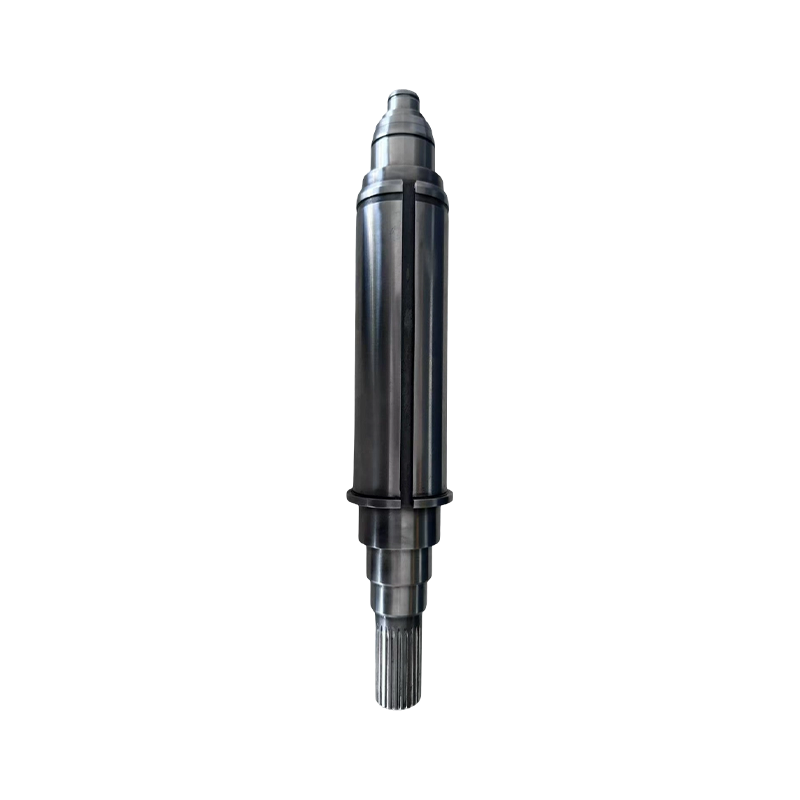
For owners and workshops that prefer to eliminate the variable, replacing the complete assembly with a new factory-balanced unit is the cleanest route. Replacement also removes worn yokes and U-joints at the same time, which is why many technicians recommend it when a high-mileage vehicle presents with driveline vibration.
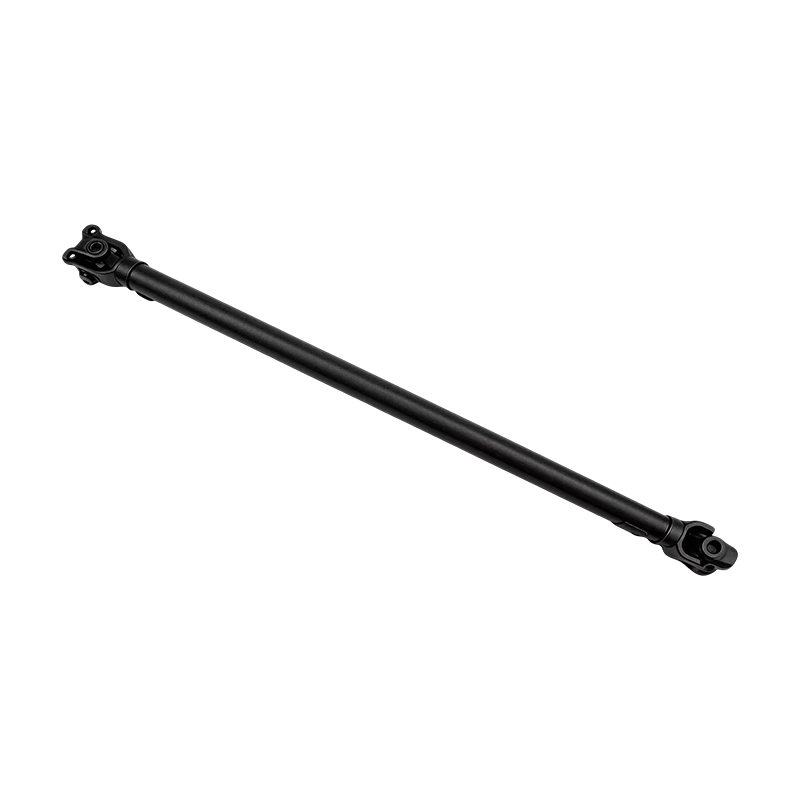 Precision Balanced Prop Shaft for Drivetrain Vibration EliminationWhen driveline vibration appears on high-mileage vehicles, replacing the complete prop shaft assembly with a factory-balanced unit simultaneously removes worn yokes and U-joints, providing the cleanest solution.View Product →
On front-wheel-drive platforms, the equivalent decision is made on the CV axle assembly. A worn outer CV joint clicks on turns, while an unbalanced or damaged inner joint shudders under acceleration. Because these shafts are sealed units, the practical choice is replacement of the complete axle rather than rebalancing.
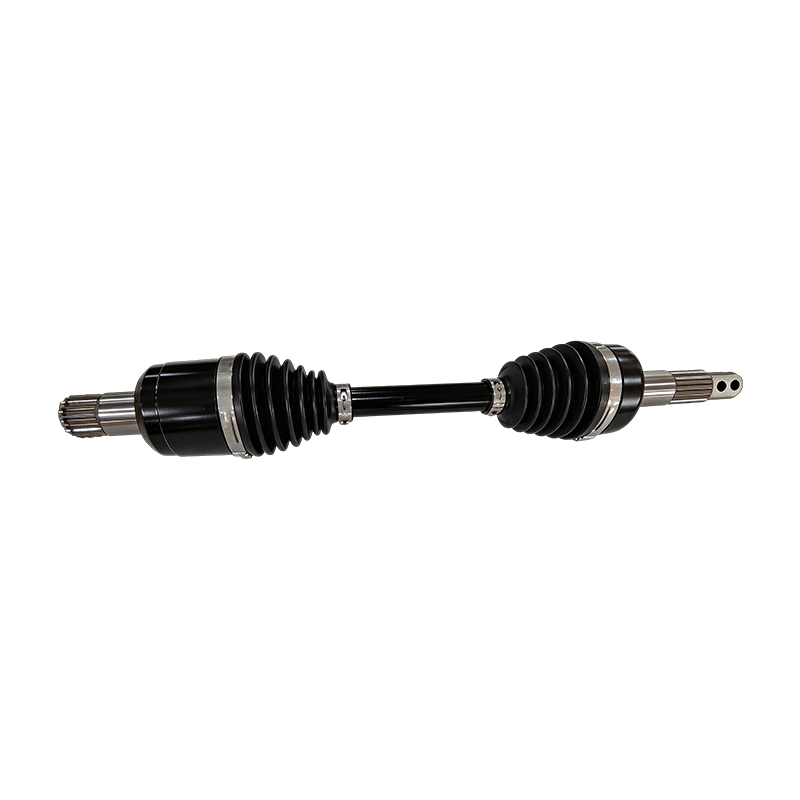 OE-Spec CV Axle Assembly for Front-Wheel Drive PlatformsA worn outer CV joint clicks on turns and a damaged inner joint shudders under acceleration. Since these sealed shafts cannot be rebalanced, replacing the complete axle with an OE-quality unit is the practical choice.View Product →
Whatever path you choose, pay attention to the small parts attached to the driveline. A cracked or hardened CV boot lets water and grit into the joint and ruins a balanced assembly within months. Replacing the boot kit before the joint fails is far cheaper than replacing the whole shaft or axle.
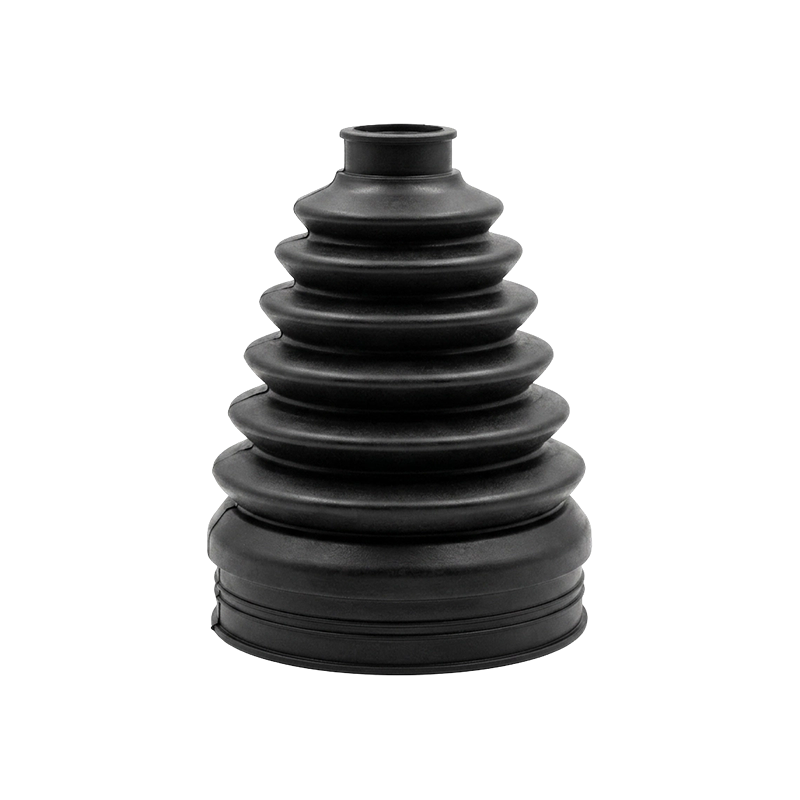 High-Performance CR CV Joint Boot for Joint ProtectionA cracked or hardened CV boot lets moisture and grit into the joint, ruining a balanced assembly within months. Replacing the boot kit before joint failure is far cheaper than replacing the whole shaft.View Product →
Prevention: Keeping the Driveline in Balance
Preventing imbalance is mostly about keeping the driveline clean and correctly serviced. A few routine habits catch problems before they become expensive:
- Inspect balance weights whenever the vehicle is lifted for an oil change; a missing weight is easy to spot.
- Remove caked mud and undercoating from the shaft after off-road use; retained debris is one of the easiest imbalance causes to eliminate.
- Grease the slip yoke and U-joints at the intervals in the service manual; a dry U-joint wears quickly and creates play that behaves like imbalance.
- After any underside impact, such as a curb strike or a deep pothole, run the vehicle up to highway speed and note any new vibration.
- When replacing a driveshaft or CV axle, choose parts that are balanced at the factory and use quality boots and joints.
The rule that started the diagnosis is the one worth repeating: the driveshaft becomes the prime suspect when a vibration follows road speed, grows under acceleration, and fades when the load is removed. Combine that behaviour with a visual check for missing weights, dents, and play in the U-joints, and you have a confident answer — without replacing parts on guesswork.
MAIL US
CONTACT US
+86 133 0665 0391
MAIL US
No. 169 Songpu Road, Cidong Industrial Zone, Cixi City, Ningbo City, Zhejiang Province, China
 OEM/ODM Automotive Chassis Sealing Components Manufacturer
EV Drivetrain Components Supplier