

 English
 中文简体
 عربى
 Español


Drive Shaft Components Explained: A Complete Buyer's Guide for OEM & AM
Posted by Admin | 30 Oct
Content
When a front-wheel-drive axle shaft starts clicking on turns, many repair orders simply say "replace the drive shaft." But a drive shaft is not one part — it is a torque-carrying assembly of a steel tube, connecting yokes, elastic joints, a sliding spline section and protective boots. Each of those elements has a different wear pattern, a different replacement interval and a different impact on the final order price. The correct place to start is the component level, not the assembly level. This article breaks down every component of a drive shaft, explains how they work together under load, and provides a practical checklist for placing an accurate order. For a broader orientation, read our driveline component overview first.
What a Drive Shaft Assembly Actually Does
A drive shaft transfers torque from the transmission or differential to the driven wheels while continuously adapting to suspension movement. In a rear-wheel-drive layout, the propeller shaft runs from the gearbox output flange to the rear differential flange. In front-wheel-drive layouts, two CV axle assemblies deliver power to the front wheels at steering angles that can exceed 35 degrees. ATV, UTV and SSV axle shafts manage even larger articulation angles as the suspension moves over uneven terrain.
The common requirement in every layout is identical: the shaft must transmit torque while continuously changing both its operating angle and its working length. The joint manages the angle, the slip section manages the length and the tube carries the torque. All three tasks happen at once, thousands of times per kilometre, under fluctuating load.
On long wheelbases, a two-piece shaft with a center support bearing is the standard solution. A bearing assembly and rubber damper support the shaft at mid-span and suppress the vibration that an unsupported length would otherwise create.
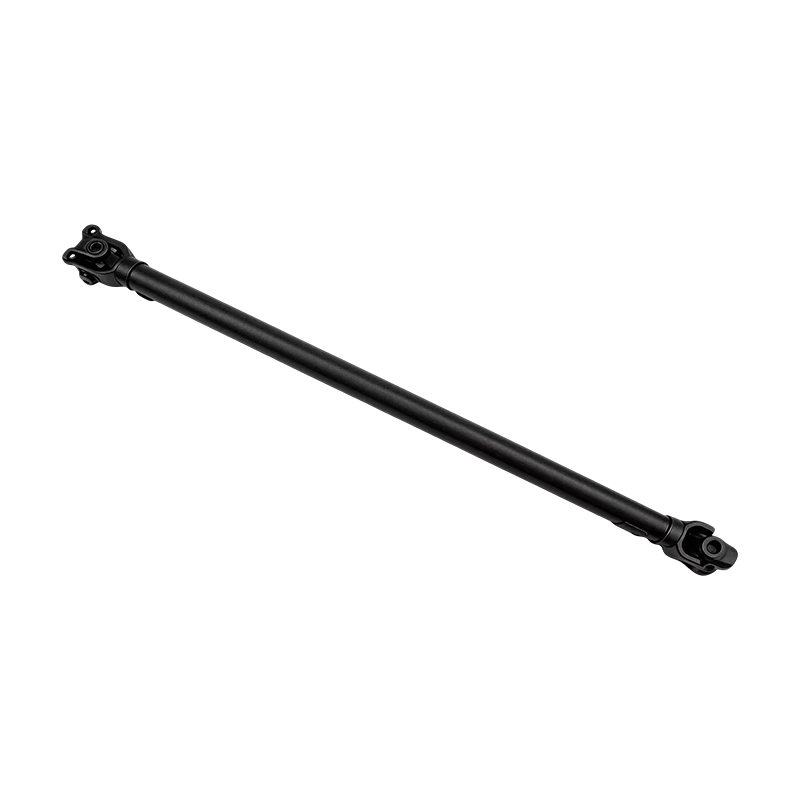 Precision-Engineered Prop Shaft Assembly for DrivetrainsThis intermediate shaft assembly bridges transmission and drive axle, reducing torque steer and NVH. Its high-rigidity steel construction and precision bearings suit long-wheelbase vehicles needing mid-span support.View Product →
The Core Components of a Drive Shaft
Whatever the vehicle layout, the components of a drive shaft follow the same functional logic. The table below lists each component, its job in the assembly and the typical fault you should inspect for in service.
| Component | Function in the assembly | Typical service fault |
|---|---|---|
| Shaft tube | Carries torsional load along the shaft length | Bending damage, dents, lost balance weights |
| End yoke / flange yoke | Connects the tube to the joint or to the transmission and differential flanges | Weld fatigue, cracked ears, worn bearing caps |
| Universal joint (U-joint) | Allows the shaft angle to change between transmission and differential | Seized or loose bearing cups, worn cross, play |
| Constant-velocity joint (CV joint) | Transmits torque at constant speed through steering and suspension angles | Clicking under load, grease leakage, worn ball tracks |
| Slip yoke and splined sleeve | Changes the effective length of the shaft as the suspension moves | Spline backlash, sticking, corrosion |
| Center bearing assembly | Supports long two-piece shafts at mid-span | Bearing rumble, cracked rubber damper |
| Boots and seals | Keep grease inside the joint and exclude water, dust and abrasives | Cracks, tears, collapsed boot leading to joint failure |
Two components usually decide the service life of the whole unit: the joint and the boot. A worn joint can be replaced individually, but once the boot has been torn for some time, the joint inside is normally contaminated beyond saving.
The Slip Yoke and Splined Sleeve
The slip yoke slides on a splined section so that the total shaft length can shorten and extend as the suspension moves. In front-drive layouts, this plunging function is built into the inner CV joint. When splines wear, you feel a clunk on acceleration and deceleration; in worse cases the shaft shows visible backlash at standstill.
Boots and Seals Are Consumables with a Design Role
A small tear in a CV boot lets water and abrasive grit reach the joint. Grease becomes contaminated quickly, and a joint that could have lasted 100,000 kilometres may fail within a few thousand. Boot material therefore matters as much as the joint itself. Chloroprene rubber (CR) resists ozone, heat and flex cracking far better than ordinary rubber, which is why our CV boot kits for constant-velocity joints and steering racks are produced in CR material and supplied with matched grease and clamps.
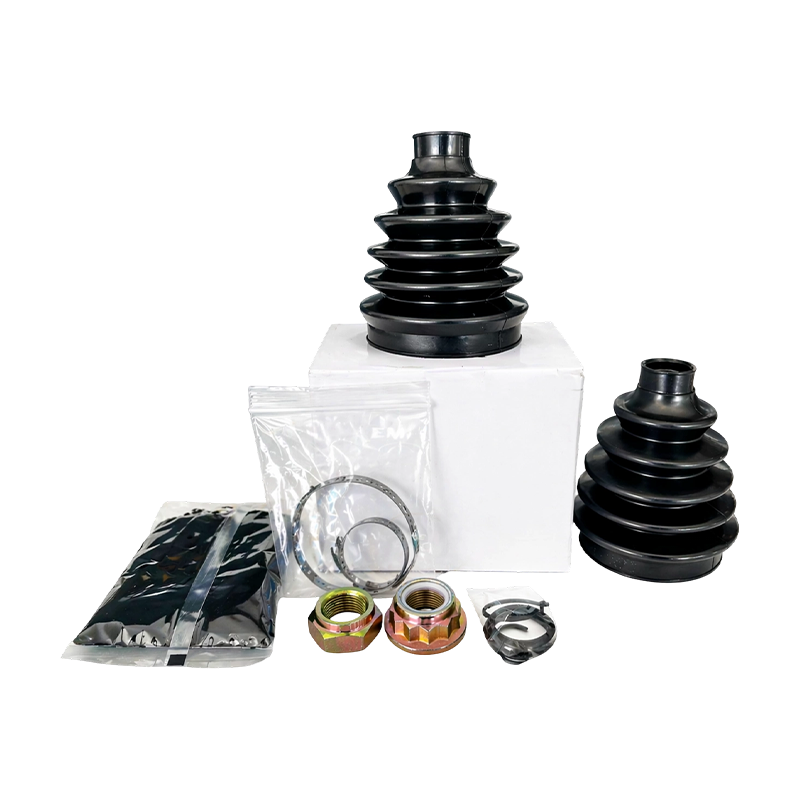 OEM-Grade CV Boot Kit with CR Rubber and GreaseIncludes a chloroprene rubber boot, MoS2 grease, and precision clamps to prevent contamination and joint wear. Ideal for repairing constant-velocity joints and steering racks with reliable sealing.View Product →
U-Joints or CV Joints: the Decision That Drives Everything Else
Choosing the joint type is effectively choosing the operating specification of the shaft. Universal joints are simple and economical, but their output speed fluctuates slightly as the shaft angle increases — a trade-off that rear-wheel-drive propeller shafts accept because their operating angles stay small.
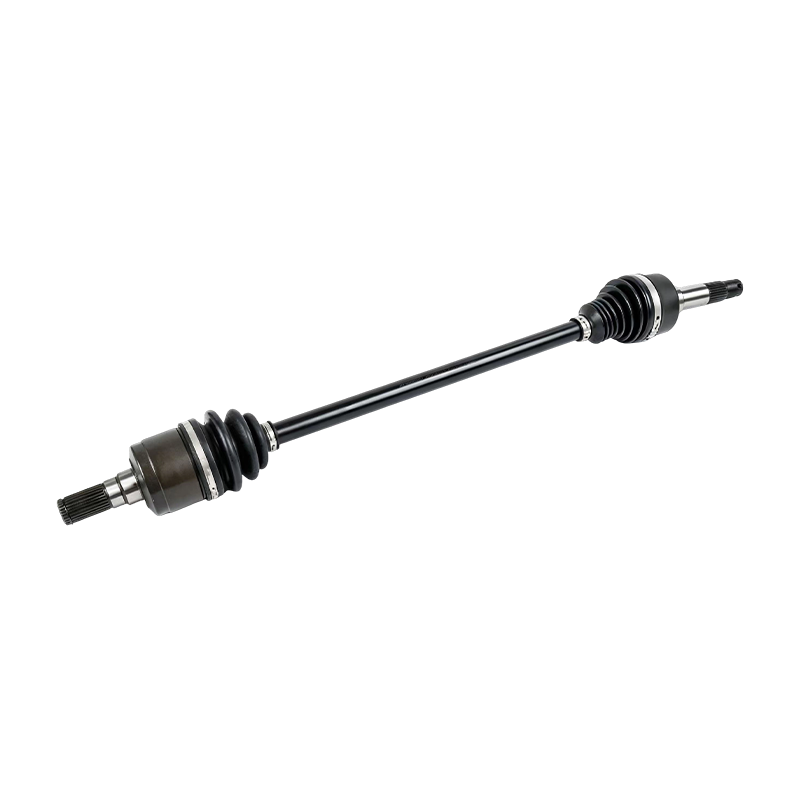
Constant-velocity joints eliminate that speed fluctuation. A ball-and-cage (Rzeppa) outer CV joint transmits torque smoothly through angles up to roughly 45 degrees, while a tripod or cross-groove inner CV joint provides the plunge capacity required on front half shafts. For steering axles, 4WD front shafts and ATV or UTV axles, a CV joint is not an upgrade — it is the required component.
- Universal joint: economical and serviceable, suitable for modest angles where small speed variation is acceptable.
- Outer CV joint: fixed ball-type joint at the wheel end, handling steering angle and driving torque at the same time.
- Inner CV joint: plunging-type joint that lets the axle shorten and extend as the suspension travels.
- Propeller shaft U-joints: selected with matching flange yokes and installed with correct phasing relative to the tube.
Never substitute a joint by length alone. Two inner joints can look identical but have different plunge travel, spline count or heat-treatment class; verifying against the original part number or a dimensional drawing is the only safe route.
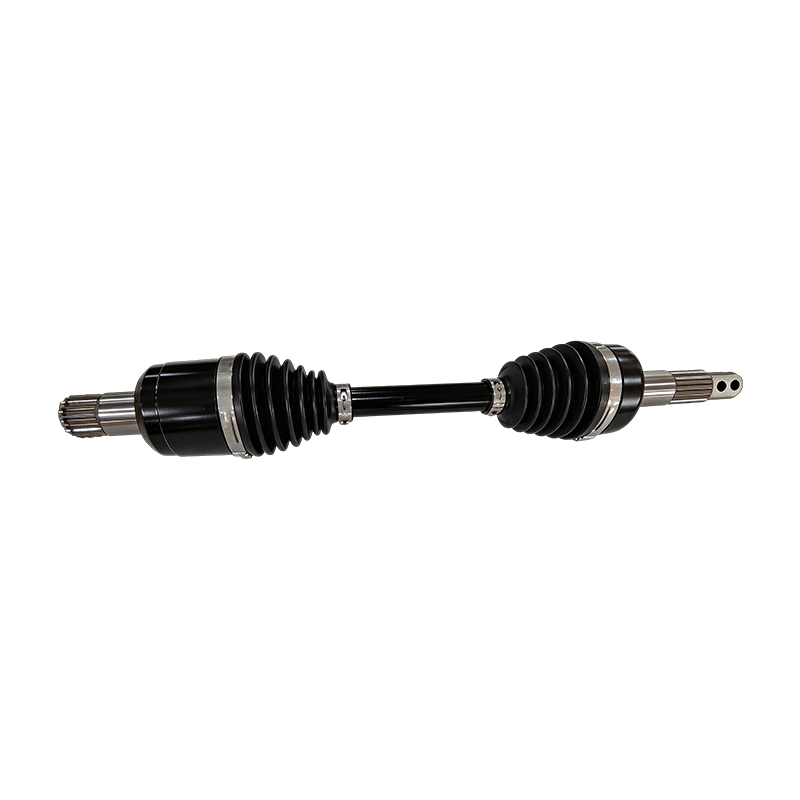 Balanced CV Axle Assembly with OE-Compatible FitManufactured from heat-treated alloy steel with high-precision CNC machining, this drive shaft ensures minimal residual unbalance. Compatible with mainstream passenger and commercial vehicles, offering durable torque transfer.View Product →
Materials, Balance and Dimensional Tolerances
A shaft that looks straight can still be out of balance enough to vibrate at highway speed. Drive shafts are balanced as complete assemblies: balance weights are welded to the tube, and a dynamic balancer verifies the residual unbalance before the unit leaves production. Even a missing weight after a repair produces a high-speed shudder.
Material selection is the second most important quality driver:
- Tube steel: carbon or high-strength low-alloy steel tubes provide the torsional stiffness; wall thickness is matched to the torque class of the vehicle.
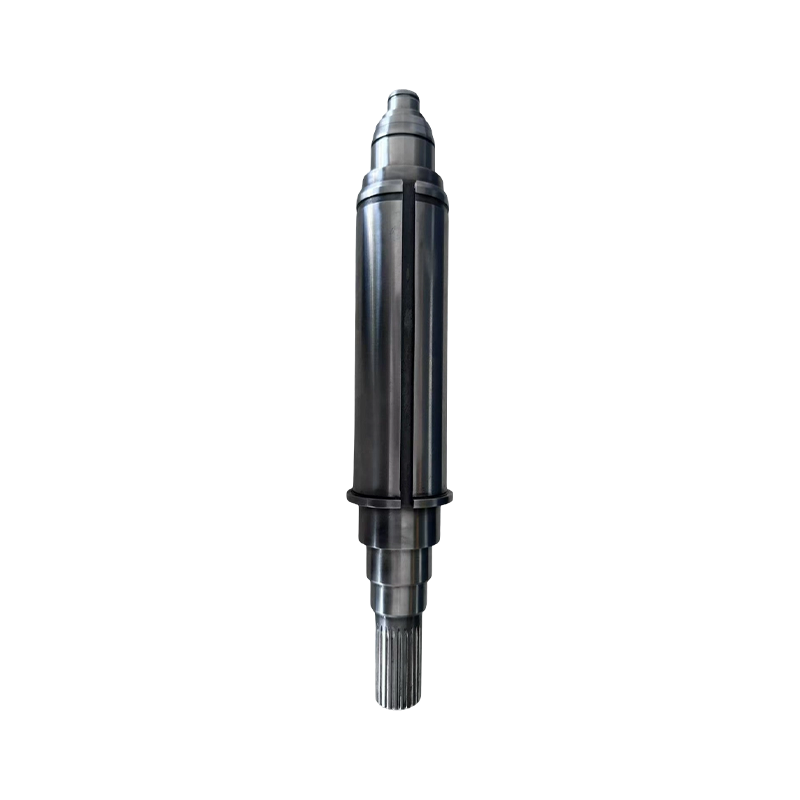
- Splines: involute splines are hardened against fretting, and the fit class must allow smooth plunging without rattle.
- Weld quality: yoke-to-tube welds on the driven side must be full-penetration; weld defects are a classic start point for fatigue cracks.
- Balancing grade: OEM print specifications commonly reference ISO 1940 balancing quality grades for rotating shafts.
- Boot compound and clamp: CR rubber for ozone and heat resistance, and a clamp that keeps the seal effective under full plunge travel.
Buyer's Checklist for Drive Shaft Components
Before you source a replacement or a prototype, run through the points below. They will filter out most mismatches before they reach the vehicle.
- Drive layout and joint family: front-drive, rear-drive, four-wheel-drive, ATV or UTV, and EV or NEV motor shaft applications.
- Installed centre-to-centre length at normal ride height.
- Required plunge and articulation angle at both ends of the shaft.
- Spline data: tooth count, module, major diameter and fit tolerance.
- Balancing and run-out requirement, with the reference standard if available.
- Kit completeness: boot, grease and clamps included in one matched set.
- Supplier evidence: OEM supply history, in-house inspection equipment and delivery capacity.
An integrated manufacturer shortens that list considerably. Cixi Quaconst Precision Machinery Co., Ltd. coordinates three production bases — rubber boots and seals, driveline components and precision structural parts — under one management system, with around 220 employees and an annual capacity above 21 million rubber parts and 2 million driveline units. Because the boot, the shaft and the mounting structures are produced inside one supply chain, your application data can be translated directly into a matched assembly instead of three separate purchase orders.
Treat the drive shaft as a system, not as one steel tube. The tube delivers the torque, the joints manage the angle, the slip section absorbs the travel and the boots protect the grease that keeps the whole system alive. When each element is specified against real vehicle data, replacement parts last longer and prototypes reach their targets faster.
We manufacture CV axle assemblies, prop shafts, CV boot kits and the surrounding precision components for OEM and aftermarket applications. If you are selecting parts for a new program or replacing a worn unit, our engineering and supply teams can review the drawing, the duty cycle and the installation envelope — visit our homepage to start the conversation.




MAIL US
CONTACT US
+86 133 0665 0391
MAIL US
No. 169 Songpu Road, Cidong Industrial Zone, Cixi City, Ningbo City, Zhejiang Province, China
 OEM/ODM Automotive Chassis Sealing Components Manufacturer
EV Drivetrain Components Supplier