Content
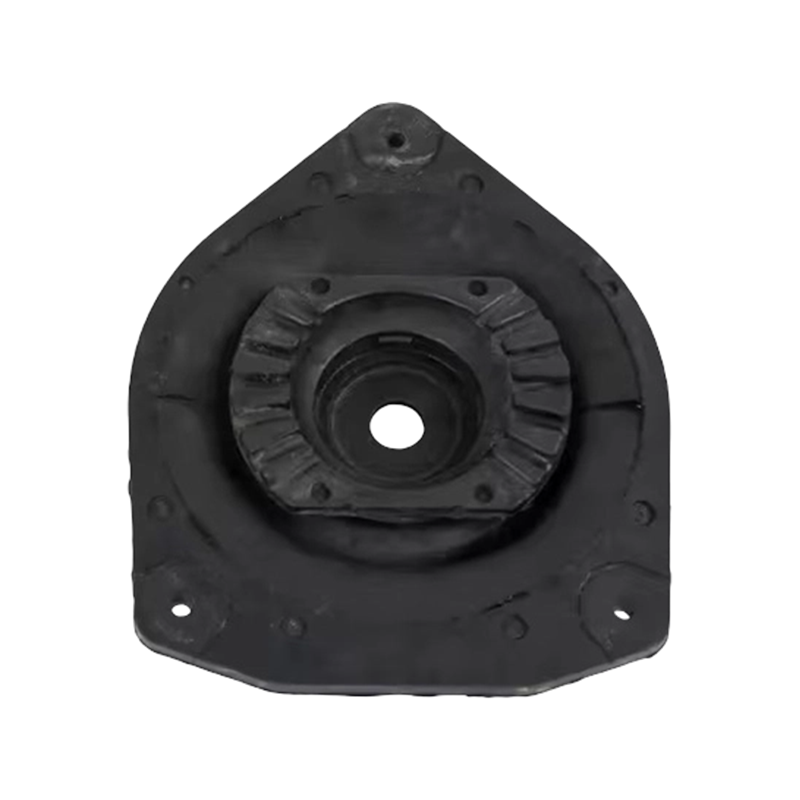
A strut mount is a critical suspension component that connects the top of the shock absorber strut assembly to the vehicle's body or chassis. Its primary functions are to isolate road vibrations, support the weight of the vehicle, and allow the strut to rotate smoothly during steering. Without a properly functioning strut mount, drivers experience increased noise, poor handling, and accelerated tire wear — all of which directly compromise vehicle safety and ride comfort.
Also commonly called a suspension top mount or upper strut mount, this component sits at the top of the MacPherson strut — the most widely used front suspension design in modern passenger vehicles. Understanding what a strut mount does, how it fails, and when to replace it is essential knowledge for automotive engineers, procurement specialists, fleet managers, and aftermarket parts buyers worldwide.
The strut mount performs multiple simultaneous roles within the suspension system. Each function directly affects driving dynamics, passenger comfort, and long-term vehicle integrity.
The rubber or elastomeric insert inside the strut mount acts as a buffer between the metal strut and the vehicle body. Road imperfections — potholes, expansion joints, uneven pavement — generate shock waves that travel up through the tire, wheel, and strut. The strut mount absorbs and dissipates this energy, preventing it from transmitting directly into the cabin. In laboratory testing, a healthy strut mount can reduce transmitted vibration energy by up to 70% compared to a metal-to-metal connection.
The strut mount bears a significant portion of the vehicle's static and dynamic load. On a typical mid-size passenger car weighing approximately 1,500 kg, each front strut mount supports a corner load ranging from 300 to 500 kg under static conditions — a figure that can spike dramatically under braking, acceleration, or cornering forces. The mount must maintain structural integrity across a wide temperature range, from -40°C in cold climates to over 120°C near engine heat sources.
On front-wheel-drive and many all-wheel-drive vehicles, the strut assembly rotates as the steering wheel turns. The strut mount incorporates a bearing (often a thrust bearing or ball bearing) that allows this rotation to occur smoothly with minimal friction. A worn or seized bearing is one of the most common causes of steering stiffness, clunking sounds during low-speed turns, and premature tire wear from improper wheel alignment.
A degraded strut mount changes the effective geometry of the suspension. Even minor displacement of the mount's position can alter camber and caster angles outside manufacturer tolerances, causing uneven tire wear patterns. Studies in the aftermarket replacement segment indicate that over 30% of premature tire wear cases in vehicles older than five years are attributable to worn or collapsed suspension mounts — including strut mounts.
A strut mount is a multi-material assembly. Each subcomponent serves a specific engineering purpose, and the quality of each directly influences the mount's overall performance and service life.
| Component | Material | Primary Function |
|---|---|---|
| Upper Metal Bracket | Stamped steel / aluminum | Anchors the assembly to the vehicle body |
| Rubber / Elastomer Insert | Natural rubber or EPDM | Absorbs vibration and road shock |
| Thrust Bearing / Ball Bearing | Hardened steel | Allows strut rotation during steering |
| Lower Mounting Plate | Stamped steel | Interfaces with the strut piston rod |
| Dust Seal / Boot | Thermoplastic elastomer | Protects bearing from contamination |
The rubber insert is arguably the most performance-sensitive element. Its compound formulation determines resistance to heat cycling, ozone degradation, and compression set over time. High-quality strut mounts use rubber compounds engineered to maintain elastic properties through at least 10 years or 150,000 km of normal vehicle use, though aggressive driving conditions or extreme climates can significantly shorten this interval.
Strut mounts fail gradually, often masking the severity of their deterioration until secondary damage to other components becomes evident. Recognizing failure modes early saves significant repair costs downstream.
Natural rubber hardens and cracks over time due to ozone exposure, heat cycling, and physical fatigue. Once the rubber loses elasticity, its vibration isolation capacity drops sharply. Drivers typically notice this as increased road noise, a harsher ride, and a sensation of the vehicle "feeling every bump." Visually, cracks or separation at the rubber-to-metal bond line are clear indicators of failure.
The steering bearing inside the strut mount is subject to continuous rotational load. Contamination from water, road salt, or dirt — particularly after a failed dust seal — accelerates bearing wear. A worn bearing produces a characteristic clunking or popping noise during slow steering maneuvers, especially noticeable when parking. In severe cases, bearing seizure can significantly increase steering effort, creating a safety hazard.
In extreme cases, the rubber insert can collapse entirely, allowing metal-to-metal contact between the strut and body. This dramatically reduces the suspension's ability to absorb impacts and can cause rapid deterioration of the shock absorber itself. Replacement at this stage typically requires addressing not just the strut mount but the entire strut assembly — a repair cost that can exceed $400–$800 per corner on many vehicles, compared to a strut mount-only replacement cost of $80–$200.
The mounting bolts that secure the strut mount to the body can loosen over time due to vibration. A loose mount produces rhythmic banging or knocking sounds that correlate with road imperfections. If left unaddressed, repeated impact can crack the mounting flange or deform the strut tower — a structural repair requiring panel work far beyond standard suspension maintenance.
Because strut mount deterioration is gradual, many drivers adapt to worsening ride quality without recognizing the underlying cause. The following checklist helps technicians and vehicle owners identify when replacement is warranted:
Industry guidelines generally recommend inspecting strut mounts every 50,000 km as part of routine suspension checks, and replacing them in pairs (both left and right) to maintain balanced handling characteristics. Replacing only one side can introduce asymmetric suspension behavior that affects straight-line stability.
A frequent source of confusion in the aftermarket is the distinction between the strut mount and the shock absorber (or strut body). These are separate components with distinct roles, though they operate as an integrated system.
| Feature | Strut Mount | Shock Absorber / Strut Body |
|---|---|---|
| Location | Top of strut assembly, at body attachment point | Between wheel hub and strut mount |
| Primary Role | Isolation, load bearing, steering pivot | Damping suspension oscillation |
| Key Material | Rubber + steel + bearing | Hydraulic fluid + steel cylinder |
| Typical Service Life | 80,000–150,000 km | 60,000–100,000 km |
| Failure Symptom | Clunking, vibration, steering stiffness | Excessive bouncing, body roll, nose dive |
When replacing shock absorbers, many technicians recommend simultaneously inspecting or replacing the strut mount — particularly if the vehicle has exceeded 80,000 km. Since the labor cost of accessing the strut assembly is shared across both components, combining the replacement can reduce total repair time by 30–40% compared to separate servicing operations.
As vehicle manufacturers push for quieter cabins, lower weight, and longer service intervals, strut mount technology has evolved significantly over the past decade.
Modern high-performance strut mounts use engineered elastomers — including silicone-rubber blends and EPDM compounds — that maintain stable mechanical properties across a broader temperature range than traditional natural rubber. These materials resist compression set (permanent deformation under sustained load) more effectively, extending service life in both extreme cold and high-temperature engine bay environments.
Thermoplastic polyester elastomers (TPEE) are increasingly used in dust boots and sealing elements within strut mounts. TPEE offers superior resistance to road chemicals, lubricants, and UV exposure compared to conventional rubber, while enabling thinner wall profiles that reduce overall component weight. This material choice is particularly relevant for electric vehicle platforms where NVH (noise, vibration, harshness) targets are more stringent than in combustion-engine vehicles.
Factory-sealed, pre-greased bearing units — integrated directly into the mount housing — have largely replaced serviceable, open-race thrust bearings in OEM designs. These integrated bearings offer longer contamination resistance and eliminate the need for periodic regreasing, though they also require complete mount replacement rather than bearing-only service once worn.
High-strength steel stampings and, in premium vehicle segments, aluminum alloy brackets are replacing heavier mild steel constructions. Weight reduction in unsprung and semi-sprung masses has measurable benefits for ride quality and handling response. Some electric vehicle platforms have adopted full-aluminum strut mount brackets that reduce component weight by up to 35% compared to steel equivalents.
For aftermarket procurement teams, workshop operators, and fleet managers, selecting the right strut mount replacement involves more than matching part numbers. The following criteria determine whether a part will deliver OEM-equivalent performance or fall short.
The global automotive suspension components aftermarket was valued at approximately USD 18.5 billion in 2023 and is projected to grow steadily through 2030, driven by an aging global vehicle fleet and increasing average vehicle age in key markets including North America, Europe, and Southeast Asia. Strut mounts represent a high-replacement-frequency category within this segment, given their rubber-intensive construction and exposure to continuous mechanical fatigue.
Beyond ride comfort, strut mount condition has direct safety implications that are often underestimated by vehicle owners and even some technicians.
A severely degraded strut mount reduces the shock absorber's effective travel range, meaning the suspension cannot fully absorb large impacts. This increases the likelihood of the wheel leaving the road surface momentarily — a condition known as wheel hop — which reduces braking effectiveness. In emergency braking scenarios on uneven surfaces, compromised strut mounts can extend stopping distances by 5–10%, a margin that is significant at highway speeds.
Additionally, a failed steering bearing within the strut mount creates unpredictable steering behavior. Sudden increases in steering effort or binding during evasive maneuvers are directly linked to bearing failure in the mount. Several national vehicle inspection programs in Europe and North America now specifically include strut mount bearing checks as part of mandatory roadworthiness testing.
Fleet operators managing light commercial vehicles are particularly exposed to strut mount-related risks, as these vehicles typically carry heavier loads and travel higher annual mileages than private passenger cars. Proactive replacement intervals — rather than reactive replacement after failure — are strongly recommended for fleet management programs, with inspection cycles aligned to every 40,000–50,000 km of service.
Even a high-quality strut mount will underperform or fail prematurely if installed incorrectly. The following practices represent industry consensus on proper installation technique.
The rapid growth of battery electric vehicles (BEVs) introduces new performance requirements for strut mounts that the traditional aftermarket is only beginning to address.
Electric vehicles are typically 15–25% heavier than comparable combustion-engine vehicles due to battery pack mass. This additional weight increases the static and dynamic load on strut mounts, potentially reducing service life relative to traditional applications. Mount designs for EV platforms must be specified with higher load ratings and more compression-resistant rubber compounds.
Furthermore, the absence of engine noise in electric vehicles makes NVH performance far more critical. Road noise transmitted through a degraded strut mount is immediately perceptible in an EV cabin in a way that would be masked by powertrain noise in a combustion vehicle. This raises the threshold for what constitutes an acceptable strut mount in electric vehicle applications — both OEM and aftermarket suppliers are investing in higher-isolation mount geometries and advanced elastomer formulations specifically for EV fitment.
Regenerative braking — a defining feature of EVs — also subjects the suspension to different loading cycles compared to friction braking. The deceleration forces applied through regenerative braking are smoother and more sustained than conventional brake-induced deceleration, influencing the fatigue profile of suspension components including strut mounts. Long-term durability data specific to EV duty cycles is still accumulating, and suppliers who invest in targeted testing and validation for these platforms will hold a significant competitive advantage in the growing EV aftermarket segment.
The strut mount is one of the most mechanically multifunctional components in a vehicle's suspension system, yet it is routinely overlooked during routine maintenance compared to higher-profile components like brake pads or tires. Its simultaneous roles in load bearing, vibration isolation, and steering facilitation mean that degradation affects vehicle dynamics across multiple dimensions — comfort, tire wear, handling, and ultimately safety.
For procurement professionals and aftermarket distributors, strut mounts represent a category where quality differentiation is highly measurable — through material specifications, bearing ratings, and dimensional accuracy — yet they are frequently subject to cost-driven downgrade decisions. The downstream consequences of a failed strut mount (accelerated shock absorber wear, tire replacement, alignment labor, and potential safety incidents) consistently exceed the cost savings from selecting a lower-grade replacement part.
As vehicle fleets age globally and electric vehicle platforms introduce new load and NVH demands, the engineering requirements placed on strut mounts will only intensify. Suppliers, distributors, and workshop operators who understand these demands — and source accordingly — are best positioned to meet the evolving needs of the automotive aftermarket through the decade ahead.
1-949-870-6672
No. 169 Songpu Road, Cidong Industrial Zone, Cixi City, Ningbo City, Zhejiang Province, China
OEM/ODM Automotive Chassis Sealing Components Manufacturer
EV Drivetrain Components Supplier