Content
|
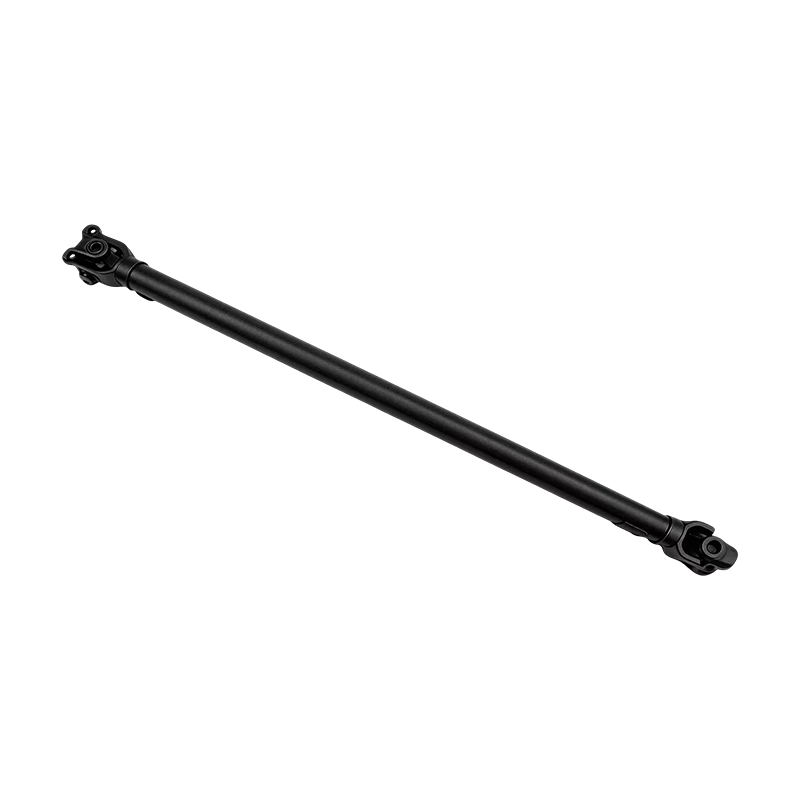
A driveshaft is balanced by mounting it on a dynamic balancing machine that spins the shaft at operating speed while sensors detect the location and magnitude of vibration caused by uneven mass distribution. Technicians then attach small correction weights (usually welded steel clips) to the shaft tube at precise points until the residual imbalance falls within an accepted tolerance, typically under 0.5 oz-in (about 30 gram-inches) for standard automotive driveshafts spinning between 3,500 and 6,000 RPM. This process should be repeated any time a driveshaft is disassembled, repaired, or shows vibration symptoms. |
While professional balancing requires specialized equipment, understanding the process helps you recognize when a shaft needs attention and how to evaluate the quality of a repair or replacement part.
A driveshaft rotates thousands of times per minute, transmitting torque from the transmission to the differential or axle. Even a small mass offset — a few grams of uneven weight, a bent tube, or worn U-joint bearings — creates a centrifugal force that grows with the square of rotational speed. At highway RPM, this imbalance translates into noticeable vibration that travels through the floor, seat, and steering wheel.
Left uncorrected, an out-of-balance driveshaft accelerates wear on several connected driveline components, including U-joints, center support bearings, transmission output seals, and differential pinion bearings. In severe cases, sustained vibration can lead to fatigue cracking of the shaft tube itself.
Accurate driveshaft balancing is not a task most shops attempt by hand — it requires equipment that can measure imbalance in fractions of a gram at operating speed. A typical setup includes:
Before balancing, the shaft should be inspected for straightness. No amount of weight correction can fix a bent tube — a shaft with runout beyond about 0.010-0.015 inches typically needs to be straightened or replaced before it goes on the balancer.
Remove the driveshaft and clean off dirt, undercoating, and old balance weights. Inspect U-joints, slip yokes, and the center bearing for play. Any worn component should be replaced before balancing, since it will introduce new imbalance once installed.
The shaft is mounted between rollers that replicate its normal support points. Machine software inputs the shaft's length, diameter, and target operating RPM to set correct measurement parameters.
The machine spins the shaft up to its normal operating speed. Sensors record vibration amplitude and phase angle, identifying both how much weight is needed and exactly where on the circumference it must go.
Steel weight clips are tack-welded to the outside of the tube at the calculated location. Weights are typically split between the front and rear sections of a long two-piece shaft to correct imbalance along its full length, not just at one point.
After the weights are attached, the shaft is spun again to confirm the residual imbalance is within tolerance. If it isn't, additional small adjustments are made until the reading passes.
Acceptable imbalance depends heavily on shaft length, weight, and maximum RPM. Longer two-piece shafts used on trucks generally allow slightly more residual imbalance than short, high-speed passenger car shafts because their operating speed is lower.
| Application | Typical Max RPM | Common Tolerance |
|---|---|---|
| Passenger car (single-piece) | 5,000-6,000 RPM | 0.25-0.5 oz-in |
| Light truck / SUV | 3,500-4,500 RPM | 0.5-1.0 oz-in |
| Two-piece heavy-duty shaft | 2,500-3,500 RPM | 1.0-2.0 oz-in per section |
| Performance / racing shaft | 6,000+ RPM | Under 0.25 oz-in |
Balancing machines are often calibrated against internationally recognized quality grades rather than a single fixed number. These grades express how much residual vibration is acceptable relative to the shaft's mass and speed, which is why a heavy truck shaft and a lightweight sedan shaft can both be "in balance" while carrying very different absolute weight tolerances.
| Grade | Typical Use | Relative Precision |
|---|---|---|
| G6.3 | Passenger car driveshafts, wheel hubs | High precision |
| G16 | Light and medium truck driveshafts | Moderate precision |
| G40 | Heavy-duty and agricultural PTO shafts | Standard precision |
A lower grade number means a tighter tolerance and a smoother-spinning shaft. Most reputable driveline shops will tell you which grade their balancer targets — if a shop cannot answer this question, it is worth asking how they verify their results at all.
There are a few checks a mechanic can do without a balancing machine, but they only narrow down the problem — they cannot correct imbalance.
Because true correction requires spinning the shaft at real operating speed with calibrated sensors, actual rebalancing should be left to a shop with dedicated equipment. Attempting to add weight based on guesswork usually makes vibration worse rather than better.
Balancing only solves half the equation — installation quality determines whether that balance holds up. A few practices help preserve a properly balanced driveshaft:
Choosing well-machined driveline components such as precision-fit U-joints, yokes, and center bearings also reduces the chance of vibration returning shortly after a balance job. Parts manufactured to tight tolerances start closer to true balance, which means less correction weight is needed and the repair is more stable over time.
Rebalancing is a cost-effective fix for shafts with straight tubes and healthy joints, but it is not always the right call. A shaft should generally be replaced rather than rebalanced if it shows:
In these cases, sourcing quality replacement driveshaft and driveline components from a supplier that machines parts to consistent tolerances will typically deliver smoother, longer-lasting results than repeatedly rebalancing a compromised shaft.
How often does a driveshaft need to be rebalanced?Most driveshafts hold their balance for the life of the vehicle unless the shaft is removed, repaired, or damaged. Rebalancing is typically needed only after U-joint replacement, a collision, or when new vibration symptoms appear. |
Can a slightly bent driveshaft still be balanced?Minor runout can sometimes be compensated with correction weights, but tubes bent beyond roughly 0.015 inches usually need straightening first. Balancing a severely bent shaft only masks the problem and often fails again quickly. |
Does balancing fix all driveline vibration?Not always. Vibration can also come from worn engine or transmission mounts, unbalanced tires, or a bad center support bearing. A proper diagnosis should rule these out before assuming the driveshaft itself is the cause. |
Is it worth balancing a used driveshaft before installation?Yes. Even a used shaft that looks straight can carry hidden imbalance from prior wear or a previous repair. Balancing it before installation is far cheaper than diagnosing vibration after the fact. |
+86 133 0665 0391
No. 169 Songpu Road, Cidong Industrial Zone, Cixi City, Ningbo City, Zhejiang Province, China
OEM/ODM Automotive Chassis Sealing Components Manufacturer
EV Drivetrain Components Supplier